A Complete Guide to Health Risks, Emission Standards, and Safer Material Choices
Key Takeaways:
- Formaldehyde is a colourless gas found in most pressed wood furniture and cabinets, with highest emissions in newly installed products
- Symptoms like headaches, eye irritation, and respiratory issues that improve when leaving your home may indicate formaldehyde exposure
- E0-rated materials emit 70% less formaldehyde than standard E1 products, meeting hospital and school safety standards
- Proper ventilation and material selection are the most effective ways to reduce indoor formaldehyde levels
The excitement of moving into a new home or completing a renovation can quickly give way to an unexpected concern: unusual odours, persistent headaches, or unexplained throat irritation. For many homeowners, these symptoms point to an invisible culprit — formaldehyde, a chemical compound that’s far more common in our living spaces than most people realize.`
At Nest Butler, where we specialize in custom cabinetry with a commitment to healthy living environments, we’ve seen firsthand how informed material choices can transform not just the aesthetics of a home, but the wellbeing of everyone living in it. This guide draws from our hands-on experience working with materials daily, combined with current research from the World Health Organization (WHO) and environmental health agencies, to help you understand formaldehyde exposure and make informed decisions for your home.
What Exactly Is Formaldehyde?
Formaldehyde (chemical formula: CH₂O) is a colourless, flammable gas with a sharp, pungent odour that many people compare to the smell of pickles or a strong chemical scent. At room temperature, it naturally exists as a gas, though you’ll often encounter it dissolved in water or incorporated into various materials and products.
“According to the World Health Organization, indoor formaldehyde levels should not exceed 0.1 mg/m³ (approximately 0.08 ppm) as a 30-minute average.” (World Health Organization [WHO], 2010). However, newly renovated homes often exceed this threshold significantly, particularly in the first 6-12 months after installation of new cabinetry or furniture.
Where Formaldehyde Hides in Your Home
Understanding the sources helps you make better choices:
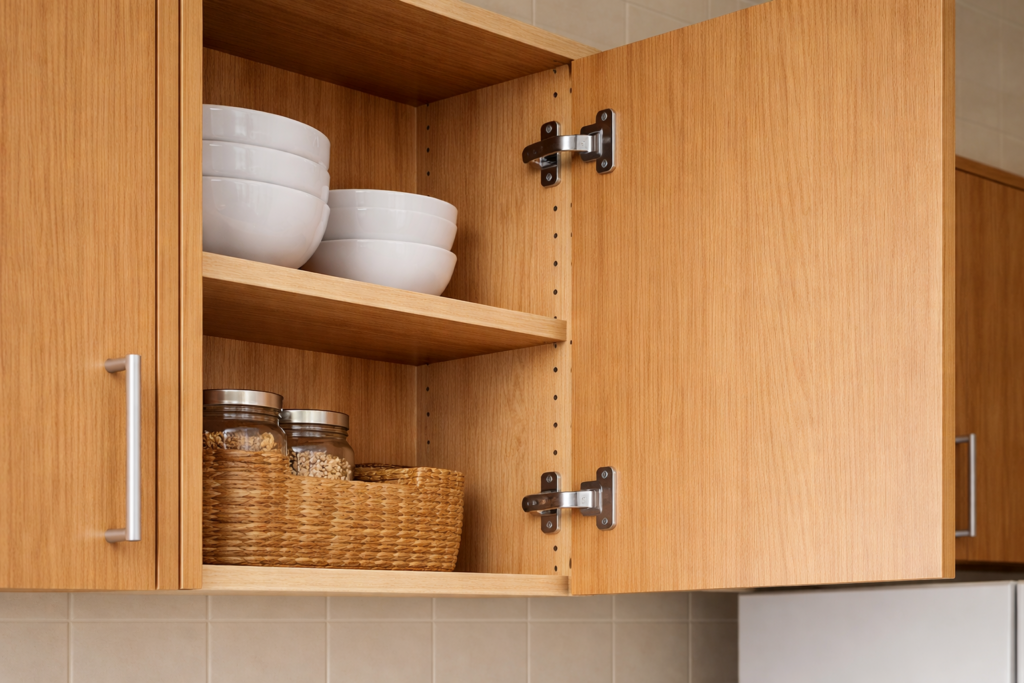
Pressed Wood Products: Composite wood products are the largest source of formaldehyde in most Malaysian homes.Materials such as particleboard, medium-density fibreboard (MDF), plywood, and other composite wood products use adhesives containing urea-formaldehyde resins. These materials are commonly found in:
- Kitchen cabinets and bathroom vanities
- Furniture (desks, bookcases, entertainment centres)
- Flooring and subflooring
- Wall panelling and decorative elements
The highest formaldehyde levels typically occur in newly built or recently renovated homes, particularly in the first few months after installation of new cabinetry, flooring, or furniture.
Recognizing Formaldehyde Exposure: Key Signs and Symptoms
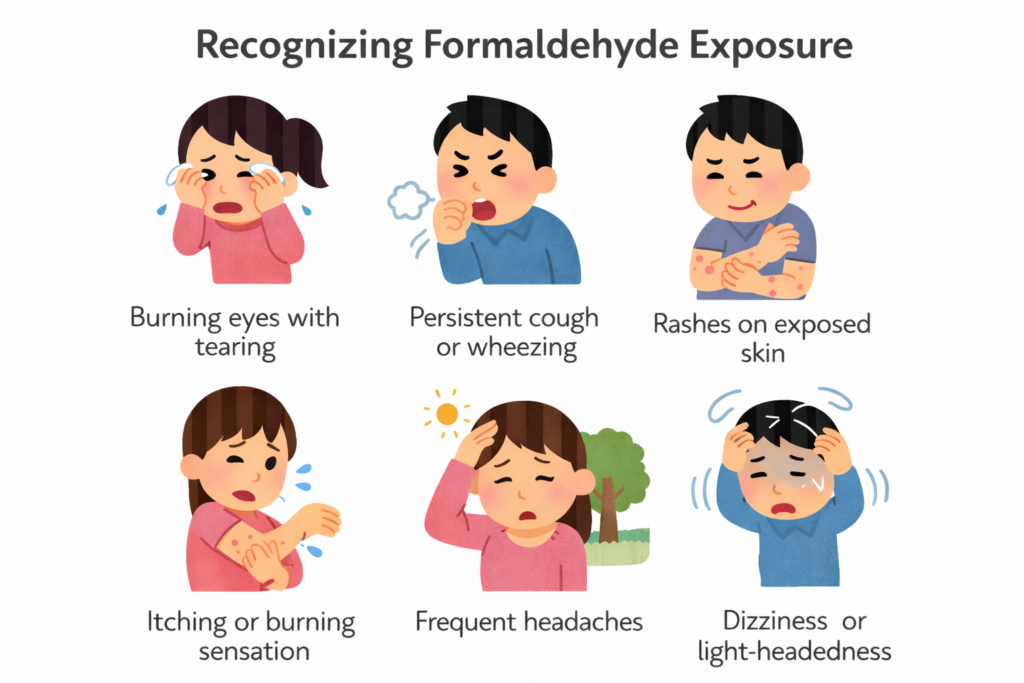
Formaldehyde’s presence often announces itself before you even think to test for it. The key is recognizing the pattern such as immediate physical reactions.
At concentrations as low as 0.1 parts per million (ppm), well below levels that most people can smell, formaldehyde begins affecting the body.
Respiratory and Mucous Membrane Irritation:
- Burning sensation in eyes, often with tearing or watering
- Scratchy, sore throat that improves when you leave the house
- Runny or congested nose
- Persistent cough or wheezing
- Difficulty breathing or chest tightness
Skin Reactions:
- Rashes or dermatitis, particularly on exposed areas
- Itching or burning sensations
- Increased sensitivity over time
Neurological Symptoms:
- Frequent headaches that fade when outdoors
- Difficulty concentrating or “brain fog”
- Dizziness or light-headedness
- Fatigue despite adequate sleep
The Telltale Pattern
Here’s what distinguishes formaldehyde exposure from other issues: symptoms typically improve when you leave the affected space. If your headaches vanish when you’re at work, or your throat irritation clears up during vacation, your home environment deserves closer examination.
The “New Home Smell” Isn’t Always Pleasant
While many people associate new construction or furniture with a distinctive odour they dismiss as normal, formaldehyde has a characteristically sharp, chemical smell that’s more pungent than pleasant. If your new cabinets, furniture, or renovated space has a smell that makes your eyes water or throat feel tight, that’s your body warning you about formaldehyde levels that may be too high.
The Solution: Understanding Material Standards
This is where informed choices make all the difference. Not all wood products are created equal when it comes to formaldehyde emissions, and understanding the standards helps you protect your home.
Emission Standards Explained
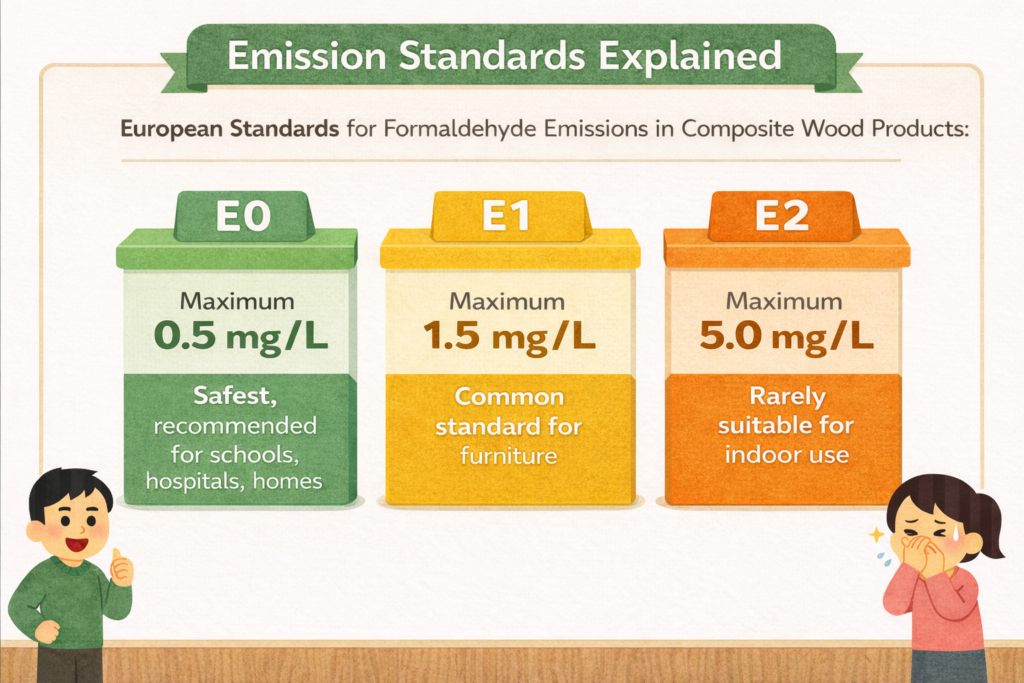
Several rating systems measure formaldehyde emissions from composite wood products:
E0, E1, E2 European Standards: Widely recognized internationally, particularly in Asia and Europe:
- E2: Allows up to 5.0 mg/L of formaldehyde emission, rarely recommended for indoor use
- E1: Maximum 1.5 mg/L, common standard for general furniture
- E0: Maximum 0.5 mg/L, among the lowest emission standards, considered safe for sensitive environments like schools, hospitals, and homes prioritizing air quality
What E0 Really Means for Your Home
E0-rated materials represent a commitment to minimal formaldehyde emissions: emitting 70% less formaldehyde than E1 standard materials. This dramatic reduction translates directly to healthier indoor air quality, particularly important in spaces where you spend significant time: kitchens, bedrooms, living areas.
The difference becomes even more significant when you consider the cumulative effect. A kitchen with E0-rated cabinets contributes only a fraction of the formaldehyde compared to standard cabinetry, creating a measurably safer environment for cooking, eating, and family gatherings.
Beyond Compliance: A Commitment to Wellness
Nest Butler use of E0 materials represents more than meeting a standard, it reflects a broader philosophy about the role of custom cabinetry in creating healthy homes:
Transparency: We believe you have a right to know what materials are going into your home and how they might affect your family. We provide clear information about material sourcing and emission ratings.
Quality Integration: E0 materials aren’t inferior to standard materials, they’re engineered for the same durability, finish quality, and structural integrity, simply with healthier adhesive systems.
Long-Term Value: While the immediate cost might seem similar to standard cabinetry, the health benefits and reduced risk create genuine long-term value that transcends initial price comparisons.
Design Without Compromise: Using E0 materials doesn’t limit design possibilities. The same custom capabilities, finishes, and configurations remain available, just with cleaner air.
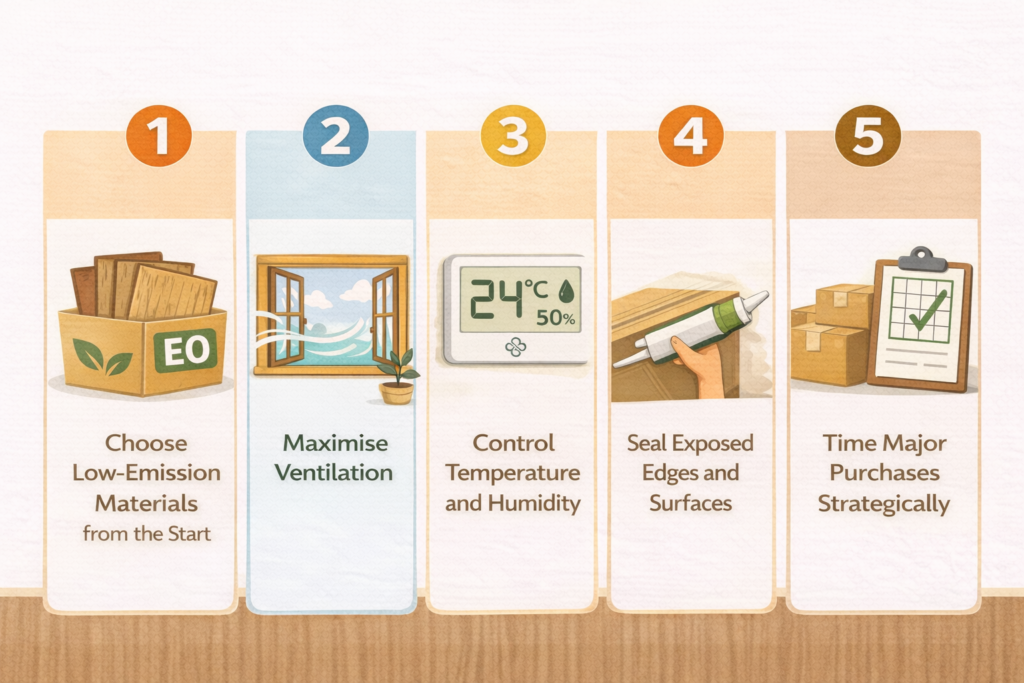
5 Practical Steps for a Low-Formaldehyde Home
Whether you’re building new, renovating, or simply wanting to improve your existing space, these strategies help minimize formaldehyde exposure:
1. Choose Low-Emission Materials from the Start
Request E0-rated materials for all pressed wood products. While availability varies, reputable cabinetry specialists can source these materials.
2. Maximise Ventilation
Formaldehyde off-gassing peaks in the first 2-4 weeks after installation. Open windows daily, run exhaust fans, and avoid keeping spaces fully air-conditioned during this period. Cross-ventilation is more effective than simply opening one window.
3. Control Temperature and Humidity
Formaldehyde emissions increase with heat and humidity, which are relevant considerations in Malaysia’s climate. Maintain moderate air conditioning (24-26°C) and use dehumidifiers if needed. Avoid letting newly installed cabinets sit in hot, unventilated spaces.
4. Seal Exposed Edges and Surfaces
Formaldehyde escapes primarily through cut edges and unfinished surfaces. Quality cabinetry uses edge banding on all exposed particleboard or MDF edges.
5. Time Major Purchases Strategically
If possible, allow new furniture or cabinets to off-gas before moving in. Some clients arrange for cabinet installation 2-3 weeks before occupancy, with windows open throughout. This “airing out” period significantly reduces initial exposure.
Frequently Asked Questions About Formaldehyde in Furniture
How long does formaldehyde off-gas from new cabinets?
Off-gassing is highest in the first 2-4 weeks and gradually decreases over 6-12 months. However, some emission continues for several years at lower levels. E0 materials reach safe levels faster due to their lower initial formaldehyde content.
Is formaldehyde in furniture dangerous?
At typical indoor levels, formaldehyde causes discomfort and irritation rather than immediate danger. However, prolonged exposure may contribute to respiratory issues, and formaldehyde is also classified by the International Agency for Research on Cancer (IARC) as carcinogenic to humans (Group 1), based on evidence from human studies (including occupational exposure) alongside supporting data (IARC, 2006; Cogliano et al., 2005).
Can I smell formaldehyde in my home?
Most people can detect formaldehyde at concentrations around 0.5-1.0 ppm, significantly higher than the levels that begin causing symptoms (0.1 ppm). If you can smell a sharp chemical odour from new furniture, formaldehyde levels are likely elevated.
Are solid wood cabinets formaldehyde-free?
Solid wood contains trace amounts of naturally occurring formaldehyde but releases far less than composite materials. However, many “solid wood” cabinets use particleboard or MDF for backs, shelves, and drawer bottoms; these components still require attention to emission ratings.
What’s the difference between E0 and CARB 2 certification?
CARB 2 (California Air Resources Board Phase 2) is a US standard roughly equivalent to E1. E0 is stricter, with approximately 70% lower emissions than CARB 2/E1. For the most health-conscious choice, E0 or “Super E0” certifications offer the lowest emission levels.
Final Thoughts
Formaldehyde remains ubiquitous in modern building materials and home furnishings, but it doesn’t have to be an accepted risk in your home. As awareness grows and technology advances, lower-emission and formaldehyde-free alternatives have become increasingly accessible and affordable.
At Nest Butler, we’ve built our approach on a simple conviction: beautiful, functional custom cabinetry shouldn’t require compromising your family’s health. Our commitment to E0 materials as standard, reflects our belief that your home should be both the space you love and the healthiest environment possible.
Whether you’re planning a kitchen renovation, considering new cabinetry, or simply wanting to understand more about the materials in your current home, remember that knowledge creates power. Understanding formaldehyde from what it is, where it hides, and how to minimize exposure can equip you to create living spaces that support you and your family’s wellbeing for years to come.
Planning a cabinetry project? Nest Butler specializes in custom solutions using E0-rated materials as standard can help you create beautiful, functional spaces that prioritize you and your family’s health from the ground up.
References:
International Agency for Research on Cancer (IARC). (2006). Summary of data reported and evaluation (Formaldehyde): Formaldehyde is carcinogenic to humans (Group 1). In Formaldehyde, 2-Butoxyethanol and 1-tert-Butoxypropan-2-ol (IARC Monographs on the Evaluation of Carcinogenic Risks to Humans, No. 88). International Agency for Research on Cancer.
World Health Organization Regional Office for Europe. (2010). WHO guidelines for indoor air quality: Selected pollutants. World Health Organization.