How to Clean Stainless Steel: The Complete Guide to Maintaining Your Kitchen’s Most Durable Surface
Key Takeaways
- Always wipe with the grain direction to prevent visible scratches and streaking
- Daily cleaning requires only warm water, mild dish soap, and a microfibre cloth
- Never use bleach, steel wool, or chlorine-based cleaners as these will permanently damage the protective chromium layer
- White vinegar removes water spots and fingerprints; baking soda paste tackles stubborn stains
- Dry immediately after cleaning, this single step prevents 90% of water spots and streaking
Stainless steel has earned its place as one of the most trusted materials in professional kitchens and slowly into modern homes. From commercial restaurant prep stations to sleek residential countertops, this remarkable alloy continues to define what durability and hygiene look like in kitchen design. Yet despite its reputation as a low-maintenance material, stainless steel often leaves everyone asking one crucial question: what’s the right way to clean it?
At Nest Butler, where we specialize in custom cabinetry and offer stainless-steel countertops, we’ve seen firsthand how proper care transforms this already exceptional material into a surface that not only lasts decades but actually looks better with age. This guide will walk you through everything you need to know. From understanding what makes stainless steel special to mastering the cleaning techniques that keep it spotless.
Understanding Stainless Steel: More Than Just a Shiny Surface
Before we discuss cleaning methods, it’s worth understanding why stainless steel has become the gold standard in kitchen surfaces.
What Makes Stainless Steel “Stainless”?
Stainless steel is an iron-based alloy that contains at least 10.5% chromium. In common kitchen grades such as 304, chromium is typically around 18–20%. When chromium reacts with oxygen in the air, it forms a very thin, invisible protective barrier. If the surface is scratched, this film re-forms quickly as long as oxygen is present, helping stainless steel stay corrosion-resistant in normal kitchen use. (Nickel Institute, 2007).
This is why proper cleaning matters. Harsh chemicals can strip away this protective layer, leaving the steel vulnerable to corrosion and permanent staining.
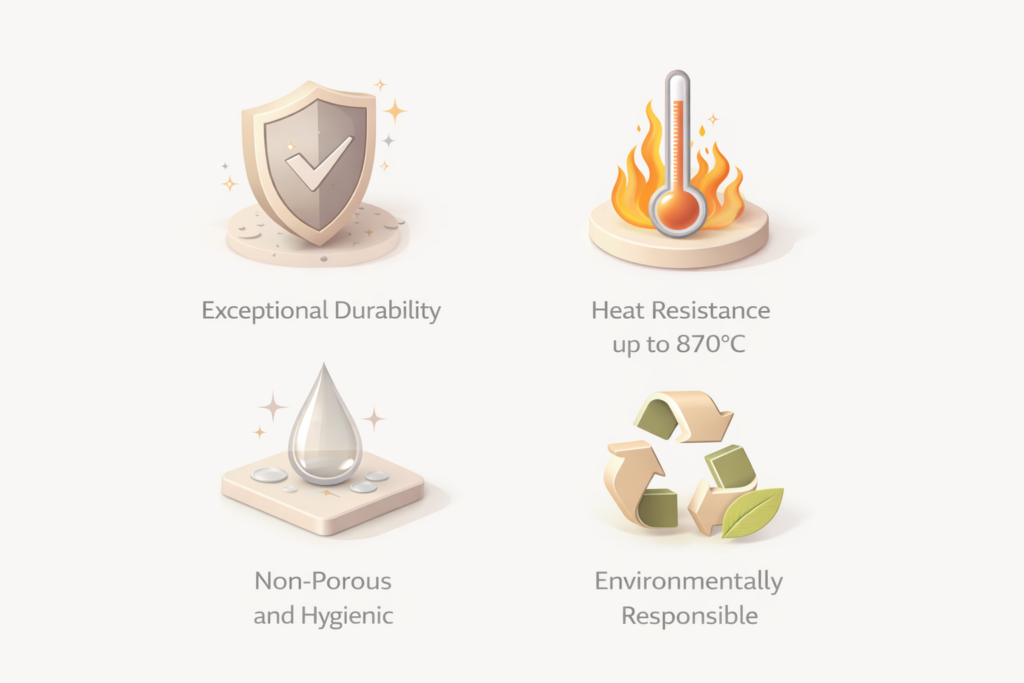
Exceptional Durability: Unlike laminate or wood surfaces that can warp, chip, or crack, stainless steel stands firm against the daily demands of kitchen life. It won’t degrade from moisture exposure or crack from temperature changes.
Heat Resistance up to 870°C: Place a hot pan directly on the surface without worry. Stainless steel can withstand temperatures that would scorch or damage most other countertop materials, making it ideal for serious home cooks.
Non-Porous and Hygienic: Stainless steel is widely used in food prep areas because it is smooth and non-absorbent, so it can be cleaned and sanitised effectively. In Malaysia, the Food Hygiene Regulations 2009 require food appliances to be kept in good condition and easily cleaned, must not impart poisonous or injurious substances, and food-contact parts for moist or high-risk foods must be smooth and of an impervious surface, which is why stainless steel is so common in registered restaurant kitchens (Food Hygiene Regulations 2009, reg. 35).
Environmentally Responsible: Stainless steel is 100% recyclable and often contains recycled content. It doesn’t require harsh sealants or treatments to maintain, making it one of the most eco-conscious choices for your kitchen.
How to Clean Stainless Steel Daily: The 4-Step Method
Now for what you came here to learn: the proper cleaning techniques that will keep your stainless-steel surfaces looking pristine.
For everyday maintenance, it takes less than two minutes and requires no specialty products. Here’s exactly what works:
What You’ll Need:
- Warm water
- Mild dish soap (2-3 drops)
- Microfiber cloth or soft non-abrasive sponge
- Clean, dry cotton towel
The Process:
- Identify the grain: Look closely at your stainless-steel surface and you’ll notice subtle lines running either horizontally or vertically. This is the “grain” of the steel.
- Wipe with the grain: Mix a few drops of dish soap with warm water. Dampen your microfiber cloth and wipe in the direction of the grain, never against it or in circular motions. This prevents streaking and minimizes the appearance of micro-scratches.
- Rinse thoroughly: Use a clean, damp cloth to remove all soap residue. Soap left behind will create streaks and dull the finish.
- Dry immediately: This is the step many people skip, yet it’s crucial. Air-drying leaves water spots and streaks. Use a clean, dry towel to wipe down the entire surface, again following the grain.
How to Deal with Stubborn Stains and Buildup
When daily cleaning isn’t enough, these methods handle tougher situations:
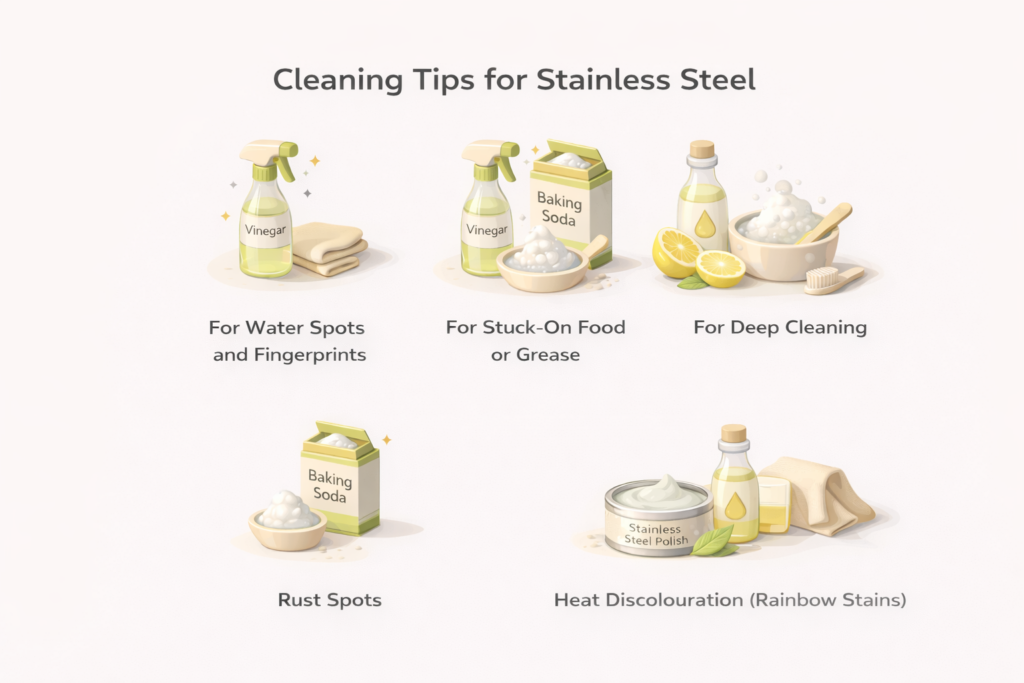
For Water Spots and Fingerprints: White vinegar is your ally here. Apply undiluted white vinegar to a microfiber cloth (never spray directly onto the surface) and wipe with the grain. The mild acidity cuts through mineral deposits and oils. Follow with a water rinse and dry thoroughly.
For Stuck-On Food or Grease: Baking soda creates a gentle yet effective scrub. Make a paste with baking soda and a small amount of water. Apply to the affected area and gently scrub with a soft sponge or brush, always moving with the grain. Rinse well and dry.
For Deep Cleaning: Combine the power of both: spray vinegar on the surface, let it sit for a few minutes, then sprinkle baking soda over it. The gentle fizzing action helps lift grime. Scrub softly with the grain, rinse thoroughly, and dry completely.
Rust Spots: Make a paste of baking soda and lemon juice. Apply to rust spots and let sit for 30 minutes. Scrub gently with a soft toothbrush in the grain direction. For stubborn spots, a non-abrasive stainless steel cleaner containing oxalic acid works effectively.
Heat Discolouration (Rainbow Stains): Apply stainless steel polish or a small amount of cooking oil with a soft cloth, buffing with the grain. For severe discolouration, a paste of cream of tartar and water left for several minutes before scrubbing can help restore the original appearance.
What You Should Never Use: Common Mistakes That Cause Permanent Damage
This is just as important as knowing what to use. These common mistakes can permanently damage your stainless steel:
Bleach or chlorine-based cleaners: These are the archnemesis of stainless steel. They attack the protective chromium oxide layer, leading to pitting, corrosion, and discoloration.
Abrasive scrubbers: Steel wool, metal brushes, or harsh scouring pads create deep scratches that compromise the protective layer and trap bacteria.
Strong alkaline or acidic cleaners: Oven cleaners and drain cleaners can strip the passive layer and cause irreversible damage.
Concentrated chemicals: Even something as mild as vinegar should be diluted for extended contact. Undiluted acids left on the surface too long can etch the finish.
Professional Maintenance Tips to Keep Stainless Steel Looking New
These additional practices used from commercial kitchen standards help maintain stainless steel surfaces:
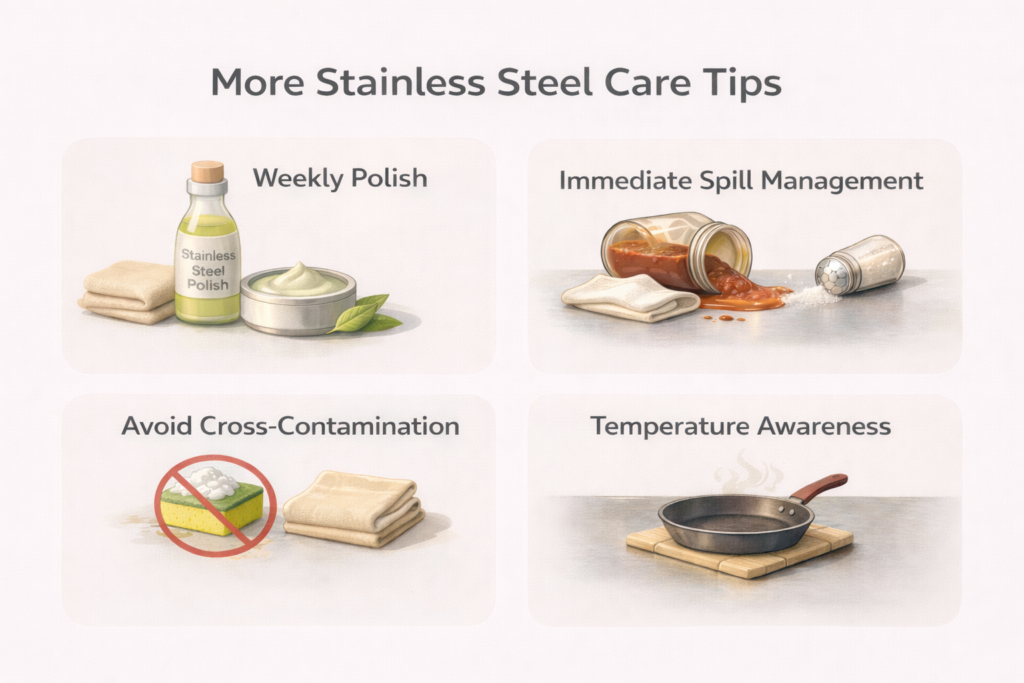
Weekly Polish: Once a week, after cleaning, apply a thin coat of mineral oil or specialized stainless-steel polish with the grain. This adds shine and creates a temporary protective barrier against fingerprints.
Immediate Spill Management: While stainless steel is stain-resistant, acidic substances (tomato sauce, lemon juice, wine) and salt should still be wiped up promptly. Prolonged exposure can potentially affect the finish.
Avoid Cross-Contamination: Don’t use the same clothes or sponges you use on other surfaces. Steel particles from other cleaning tasks can transfer to stainless steel and cause rust spots.
Temperature Awareness: While stainless steel can handle hot pans, allowing extremely hot items to sit in one spot for extended periods can cause discoloration. Use trivets for items straight from the oven.
Frequently Asked Questions About Cleaning Stainless Steel
Can I use Windex or glass cleaner on stainless steel?
Some glass cleaners work, but many contain ammonia which can leave streaks or damage certain finishes over time. Plain white vinegar diluted 1:1 with water is safer and equally effective for fingerprints and light cleaning.
Why does my stainless steel still show fingerprints after cleaning?
Two common causes: not drying completely (water spots attract more oils), or soap residue left behind. Try the vinegar method for a streak-free finish, and always buff dry with a clean towel.
How do I find the grain direction on my stainless steel?
Look at the surface under bright light at an angle. You’ll see fine parallel lines running in one direction—this is the grain. If you can’t see it clearly, run your finger lightly across the surface; you’ll feel slightly more resistance when moving against the grain.
Is it safe to cut food directly on stainless steel countertops?
While stainless steel is food-safe and won’t harbour bacteria, cutting directly on the surface will dull your knives quickly and may scratch the finish over time. We recommend using cutting boards to protect both your knives and the countertop appearance.
Can scratches on stainless steel be repaired?
Light scratches often blend into the surface over time as the finish develops a natural patina. For deeper scratches, stainless steel scratch removal compounds can help. For severe damage, professional refinishing is an option.
The Nest Butler Difference
At Nest Butler, we understand that choosing a countertop material is an investment in your home’s functionality and value. That’s why we guide our clients through every aspect of the decision, from selecting the right gauge and finish to understanding long-term care.
Our custom cabinetry expertise means we design systems where stainless-steel countertops integrate seamlessly with your kitchen’s workflow. We’ve seen how proper installation and quality materials make the difference between a countertop that’s merely functional and one that becomes the centrepiece of a kitchen you’ll love using every day.
Looking to explore stainless steel countertops for your kitchen renovation? The team at Nest Butler specializes in custom cabinetry solutions that can help you choose the perfect configuration, finish, and installation for your needs.
References:
Food Hygiene Regulations 2009 (Malaysia), reg. 35 (Handling of food, appliances, etc.).
Nickel Institute. (2007). Pickling and passivating stainless steel.