Nest Butler at HOMEDEC April 2026: A Recap of Our First Exhibition
Key Takeaways
- Nest Butler participated in HOMEDEC for the first time from 30 April to 3 May 2026 at the Kuala Lumpur Convention Centre.
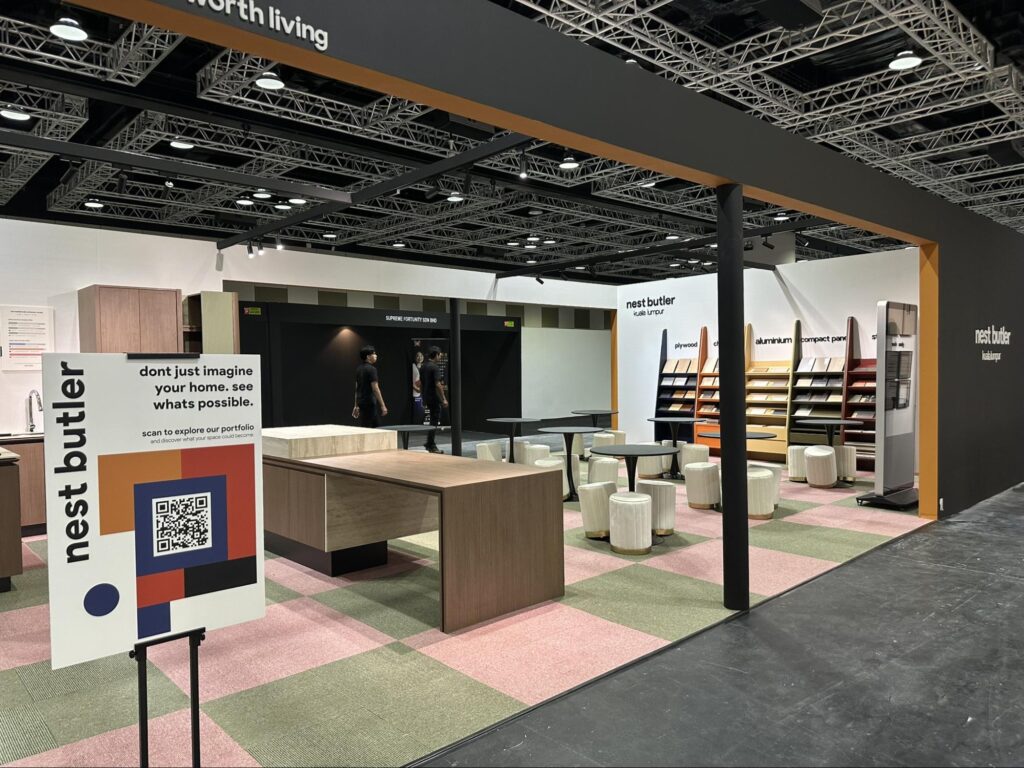
- Our Bauhaus-inspired exhibition booth featured a complete kitchen cabinet display, a large island, signature curved details, a sandwich design feature, and a pull-up lifting table.
- Visitors could explore and compare a wide range of cabinetry materials, including HPL laminated plywood, melamine-faced chipboard, honeycomb aluminium, glass doors, compact panels, and stone surfaces.
- We introduced lower-formaldehyde material options such as Super E0 and F4 Stars for homeowners who want to prioritise indoor air quality alongside design and durability.
- The exhibition allowed homeowners to experience Nest Butler’s cabinetry designs, materials, functionality, and workmanship in person.
A Bauhaus-Inspired Exhibition Booth
The overall theme of the Nest Butler HOMEDEC booth was inspired by the Bauhaus design movement.
Bauhaus design is known for combining clean geometry, functional thinking, simple forms, and purposeful use of materials. We applied these principles to the booth by balancing strong architectural shapes with practical cabinetry features.
The layout was designed to feel visually distinctive while remaining easy for visitors to explore.
Curved forms helped soften the overall structure, while contrasting materials, clean lines, and carefully positioned displays created a clear journey through the booth.
Every section had a purpose, from demonstrating kitchen functions to helping homeowners compare different cabinetry materials.
A Complete Kitchen Cabinet Display
The main highlight of the Nest Butler booth was a complete kitchen cabinet setup.
Instead of presenting individual cabinet samples, we created a full kitchen environment to show how different design ideas, storage solutions, and materials could work together in an actual home.
The kitchen featured several design highlights.
Sandwich Design
The sandwich design introduced a layered visual effect to the cabinetry.
By combining different colours, materials, or finishes within one composition, the feature added depth without making the kitchen feel overly complicated.
It also demonstrated how small material contrasts can create a stronger visual identity within a modern kitchen.
Pull-Up Lifting Table
The pull-up lifting table was one of the interactive features that attracted the attention of many visitors.
When not in use, the table could remain integrated within the cabinetry. It could then be lifted when an additional worktop, dining area, or preparation surface was required.
This feature showed how adaptable furniture can help homeowners make better use of limited space, especially in apartments and compact homes.
Signature Curved Designs
Curved cabinetry has become one of Nest Butler’s recognisable design details.
At HOMEDEC, our curved features were incorporated into the kitchen to soften the corners and create a more comfortable visual flow around the space.
Besides contributing to the overall Bauhaus-inspired concept, the curves also showed how cabinetry can move beyond standard square forms while remaining practical for daily use.
Large Kitchen Island
A large kitchen island formed the centrepiece of the kitchen display.
The island provided a generous preparation surface while demonstrating how a kitchen can support cooking, dining, conversations, and family activities within one central area.
It also allowed visitors to see how the scale, proportion, finishes, and storage details of an island could influence the overall kitchen layout.
Exploring Different Cabinetry Materials
Material education was another important part of the Nest Butler HOMEDEC booth.
Many homeowners choose cabinetry based mainly on colours and external finishes. However, the internal structure, core material, surface treatment, hardware, and installation method can also affect the durability and long-term performance of the cabinets.
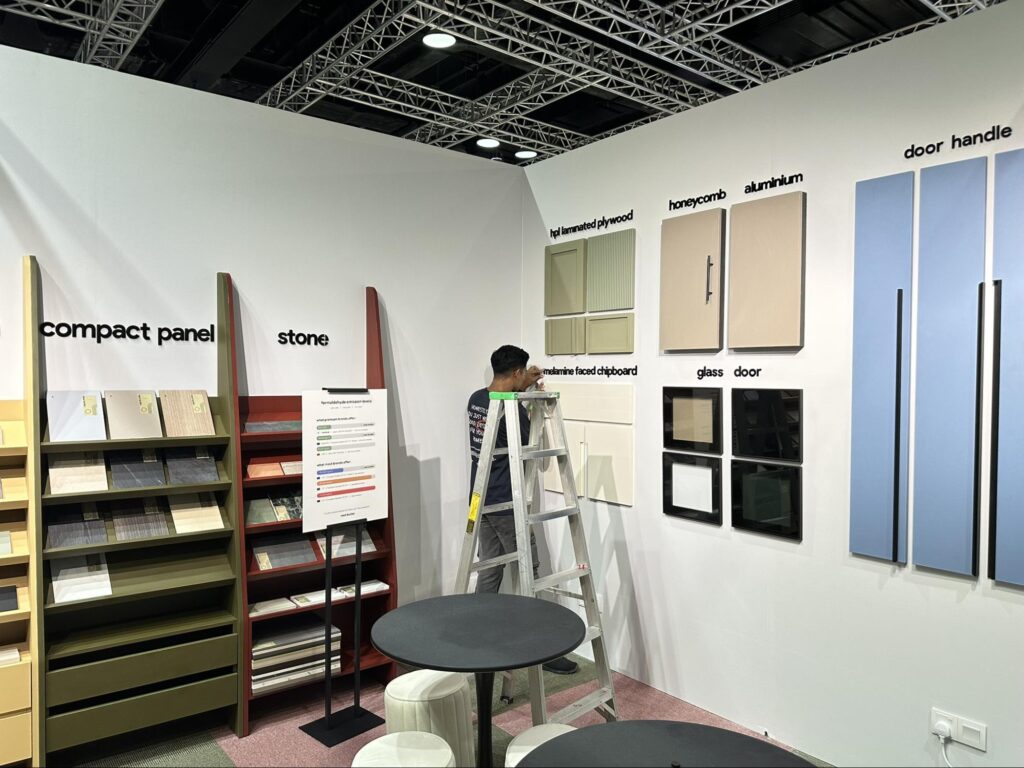
To help visitors understand these differences, we created a dedicated material wall featuring several commonly used cabinetry components.
These included:
- HPL laminated plywood
- Melamine-faced chipboard
- Honeycomb aluminium
- Glass door systems
- Different door handle options
The display allowed visitors to view the materials closely and understand that each option has its own appearance, construction, benefits, and suitable applications.
For example, the material selected for a kitchen cabinet may be different from the material recommended for a wardrobe, display cabinet, wet area, or decorative feature.
There is no single material that is automatically suitable for every part of a home. A good cabinetry proposal should consider where the cabinet will be installed, how it will be used, the surrounding conditions, and the homeowner’s priorities.
A Display Cabinet Featuring Popular Materials
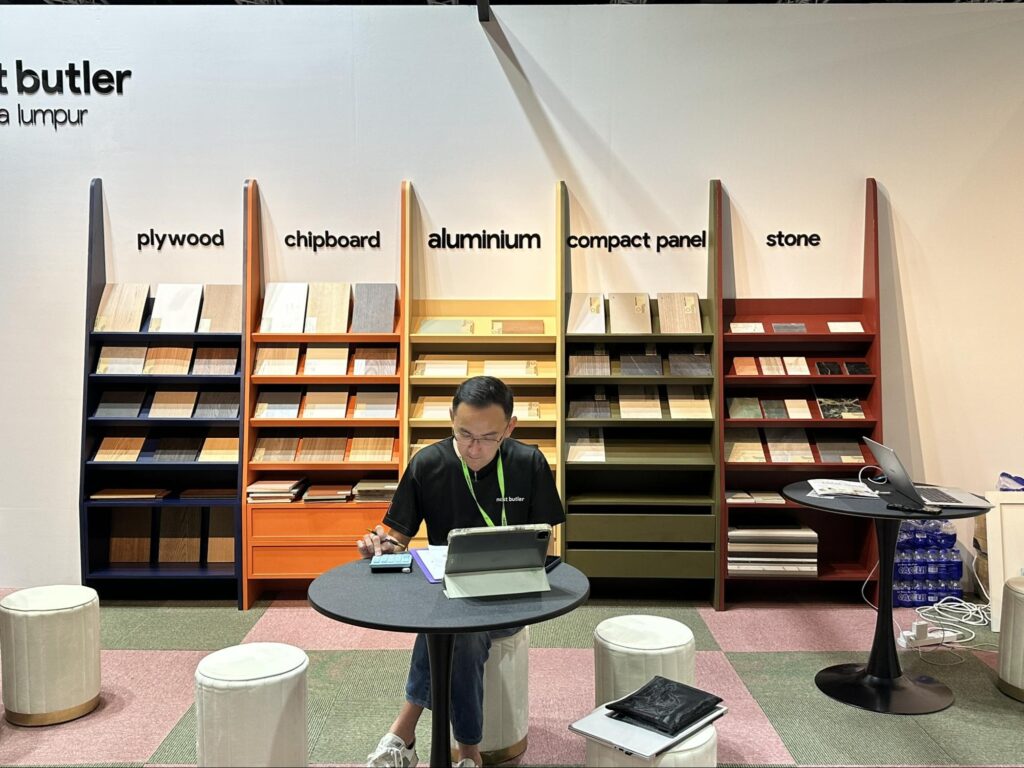
We also created a dedicated display cabinet featuring materials that are frequently used across Nest Butler projects.
The display included:
Bringing these materials together in one display gave visitors an opportunity to compare their textures, thicknesses, finishes, and visual characteristics.
It also showed how different material categories can be combined within one home.
Plywood and chipboard can be used for cabinet structures, aluminium can support selected frames and door systems, compact panels can provide slim and durable surfaces, while stone can create a strong feature for countertops and islands.
The right combination depends on the design direction, budget, application, maintenance requirements, and expected level of durability.
Why Material Choice Matters Beyond Appearance
One of the main messages Nest Butler highlighted during HOMEDEC April 2026 was that material selection should not focus only on aesthetics.
Colours, textures, and finishes are important because they shape how a home looks. However, homeowners should also consider what the material is made from, how it has been tested, and how it may affect the indoor environment.
Cabinetry can take up a large surface area inside a home.
A complete renovation may include a kitchen, wardrobes, shoe cabinets, TV cabinets, study areas, display cabinets, bathroom storage, and other built-in units.
Because these cabinets are used every day and remain inside the home for many years, the quality of the materials deserves careful attention.
This is especially relevant in modern homes that frequently use air-conditioning or have limited natural ventilation.
Introducing Super E0 and F4 Stars Materials
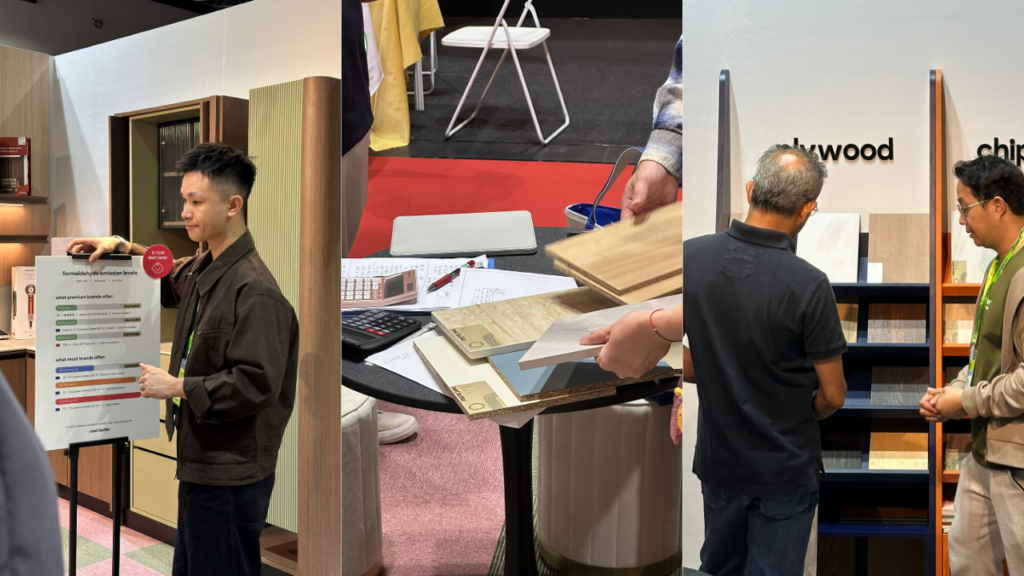
At HOMEDEC, Nest Butler introduced upgraded material options such as Super E0 and F4 Stars.
These materials are associated with ultra-low formaldehyde emission and are suitable for homeowners who want to be more mindful of indoor air quality when choosing cabinetry.
Formaldehyde can be associated with the adhesives and resins used in engineered wood products. The amount emitted may vary depending on the board composition, manufacturing process, certification, testing method, and quality of production.
For this reason, homeowners should look beyond the external colour of a board and ask about its emission classification and supporting test information.
Super E0 is commonly used to describe an upgraded low-formaldehyde material with lower emissions than standard E0 options. At Nest Butler, our Super E0 material option is supplied by Panel Plus.
F4 Stars, also written as F★★★★, is a Japanese formaldehyde emission classification commonly associated with very low-emission building and wood-based materials. Our F4 Stars material option is supplied by HVEA.
These options can be considered for different areas of the home, particularly bedrooms, wardrobes, nurseries, study rooms, kitchens, and homes with extensive built-in cabinetry.
Choosing a lower-emission board does not mean that aesthetics or durability need to be compromised. It means considering the material inside the cabinet with the same level of care given to the finish seen on the outside.
Connecting With Homeowners at HOMEDEC
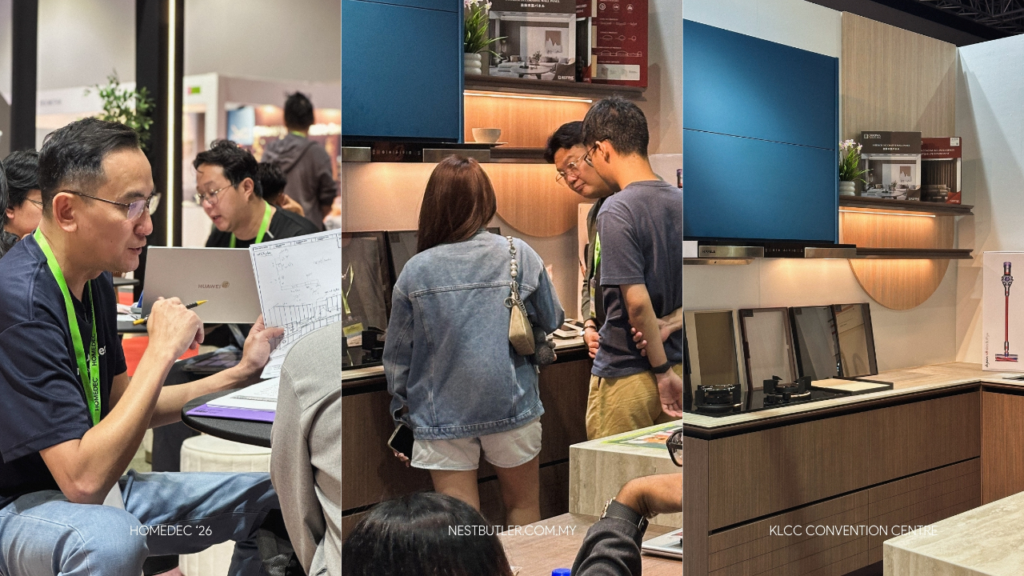
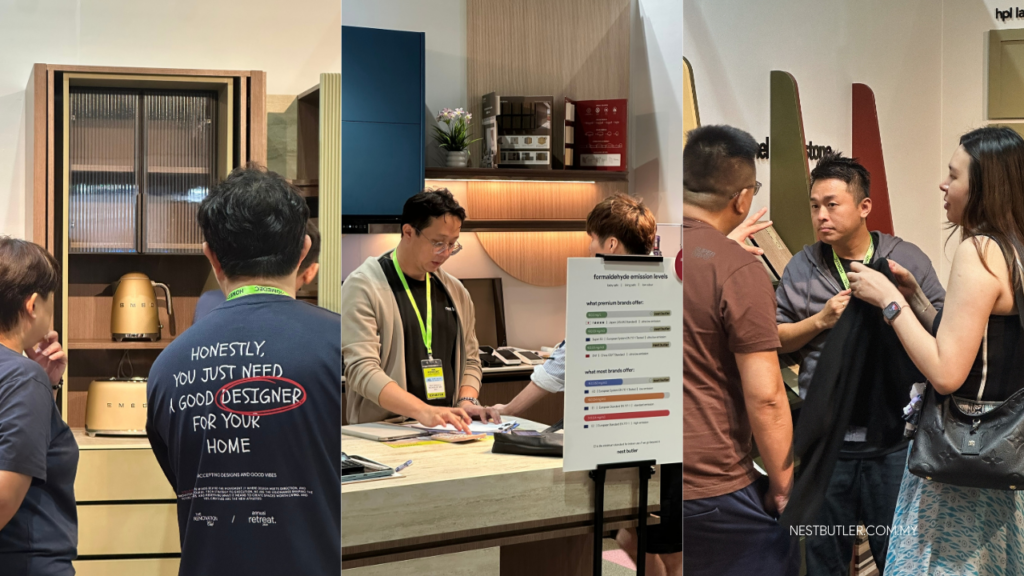
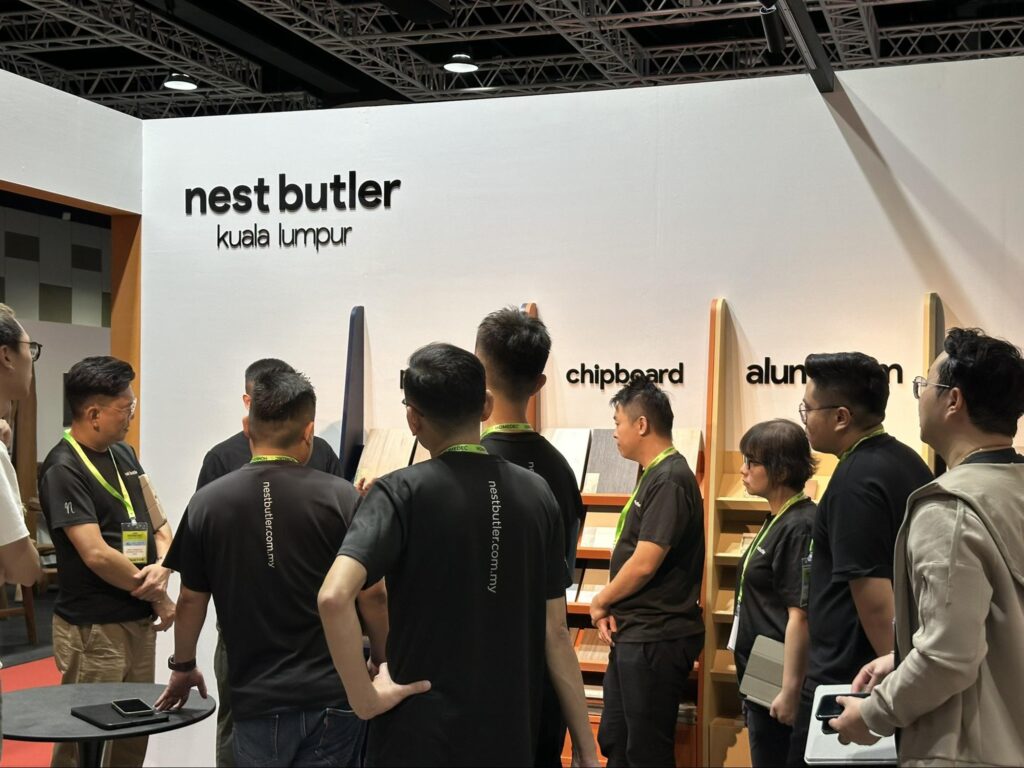
Beyond the displays, one of the most valuable parts of HOMEDEC was the opportunity to speak directly with homeowners.
Visitors asked questions about cabinetry layouts, storage planning, material differences, kitchen functions, renovation considerations, and how customised designs could be adapted to their own spaces.
These conversations reminded us that homeowners are becoming more informed about renovation.
They are not only looking for attractive designs. They also want to understand how a cabinet works, why a particular material is recommended, how it will be maintained, and whether it is suitable for long-term living.
HOMEDEC gave us the opportunity to explain these details in person while allowing visitors to touch, open, compare, and experience the displays themselves.
Final Thoughts
Nest Butler’s first HOMEDEC exhibition was an important and memorable experience for our team.
From the Bauhaus-inspired booth concept to the complete kitchen display, interactive lifting table, curved cabinetry, material wall, and low-formaldehyde material options, every part of the space was created to help visitors understand our approach to interior design and custom cabinetry.
We believe a well-designed home should balance appearance, functionality, durability, and material quality.
Beautiful cabinetry should not only complement the interior. It should also support the homeowner’s routines, suit the way the space is used, and be made from materials selected with long-term living in mind.
Thank you to everyone who visited Nest Butler at HOMEDEC April 2026, spoke with our team, explored our displays, and shared this milestone with us.
Nest Butler hopes to see you again soon at our future events.