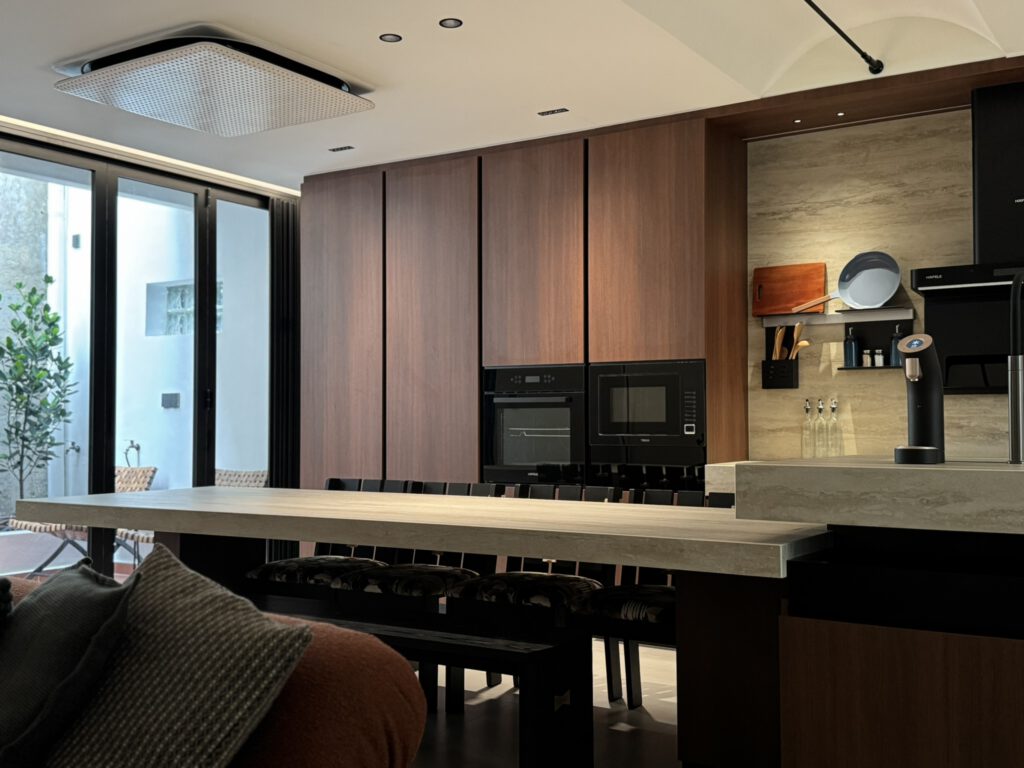
Seamless Kitchen Cabinet Design at Taman Tun Dr Ismail, Kuala Lumpur
A Custom Kitchen Renovation in Kuala Lumpur with Plywood Cabinets, Sintered Stone Countertops, and Integrated Appliances
In the heart of Taman Tun Dr Ismail, Kuala Lumpur, this kitchen renovation was designed around one clear goal: to create a kitchen that looks seamless, works beautifully, and performs well in Malaysian homes.
For many homeowners in Malaysia, a kitchen needs to handle more than just daily cooking. It has to deal with humidity, heat, oil, heavy storage, frequent use, and the need for materials that are safer for long-term indoor living.
This Taman Tun Dr Ismail kitchen project brings those needs together through custom plywood kitchen cabinets, sintered stone countertops, concealed appliance integration, and a warm wood-toned design that feels refined without being difficult to maintain.
At Nest Butler, we believe a kitchen should not only look good on handover day. It should continue to feel practical, durable, and comfortable years after installation.
Key Takeaways
- This kitchen renovation is located in Taman Tun Dr Ismail, Kuala Lumpur.
- The kitchen uses plywood cabinet construction for better strength, durability, and moisture resistance.
- The cabinetry is finished with Lamitak WY 4222X Stateroom Eames Teak for a warm wood-toned look.
- A concealed refrigerator keeps the kitchen design clean and seamless.
- The island and countertops use sintered stone, a durable and non-porous surface suitable for Malaysian cooking.
- Integrated power outlets, deep drawers, and organised storage improve daily kitchen workflow.
- The overall design focuses on long-term performance, healthier material choices, and practical storage for Malaysian homes.
The Challenge: Designing a Kitchen for Malaysian Living
Anyone who’s lived in Kuala Lumpur knows the unique demands our climate places on home interiors. Humidity levels regularly exceed 80%, creating an environment where standard particleboard cabinets swell, edges delaminate, and what looked pristine at installation begins showing wear within months.
Add to this the Malaysian cooking style often involving high heat and generous use of oils and spices. You need a kitchen that is genuinely robust, not just aesthetically pleasing. The traditional answer has been to accept these limitations, plan for replacement, or spend significantly more on materials marketed as “premium.”
This project took a different approach: specify materials that perform as standard, not as upgrade.
The Foundation: Plywood That Actually Works
Walk into this kitchen and the warmth of the wood-toned cabinetry immediately catches your eye. Finished with Lamitak WY 4222X Stateroom Eames Teak, it delivers the rich, sophisticated look of high-end timber with a contemporary edge. But it’s what lies beneath that finish that matters most to long-term performance.
Every cabinet in this kitchen is constructed from plywood, a material choice that’s increasingly recognized as the intelligent standard for Malaysian conditions. Unlike particleboard or MDF, which absorb moisture and expand in humid environments, plywood’s cross-laminated structure provides inherent moisture resistance. The layers of wood veneer bonded with their grains running perpendicular to each other create dimensional stability that fights against warping and swelling.
The structural benefits extend beyond climate resistance. Each cabinet is engineered to withstand a minimum of 70kg of weight, essential for Malaysian kitchens where a single cabinet might house everything from the rice cooker and multiple pots to jars of dried goods and small appliances. This isn’t marketing speak; it’s the difference between cabinets that sag within years and structures that maintain their integrity decade after decade.
For Malaysian homeowners tired of replacing kitchen cabinetry every few years due to humidity damage, plywood represents not just better performance but genuine long-term value. The material’s resilience means maintenance becomes about keeping surfaces clean, not managing ongoing deterioration.
The Concealed Refrigerator: Clean Lines, Zero Compromise
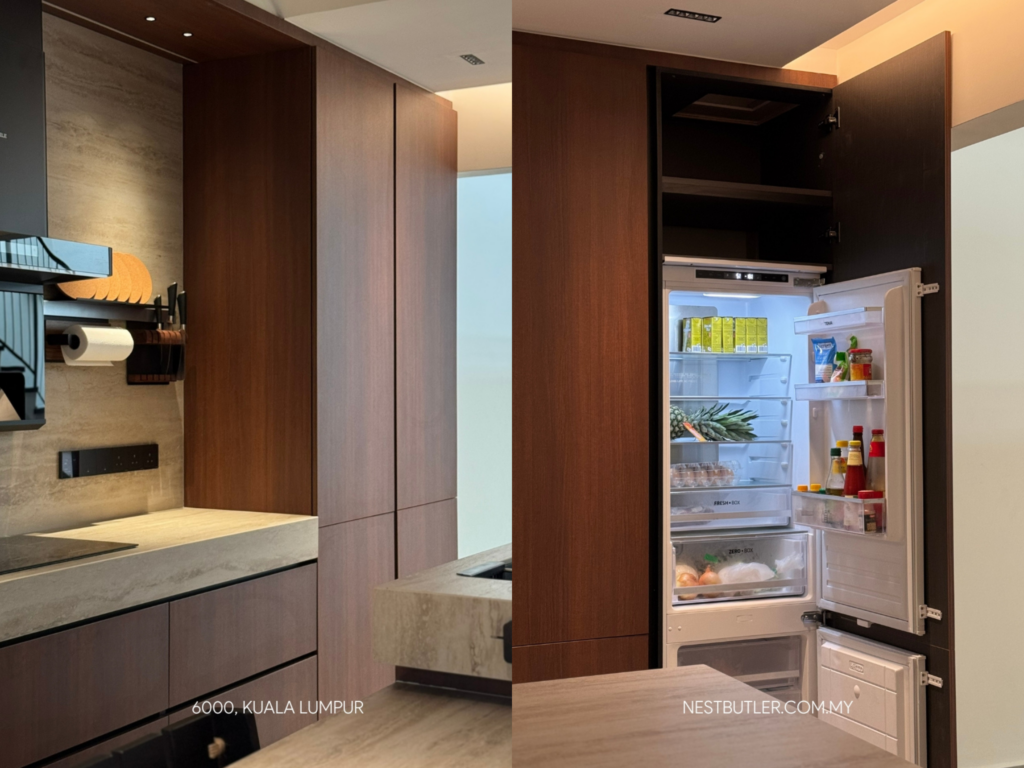
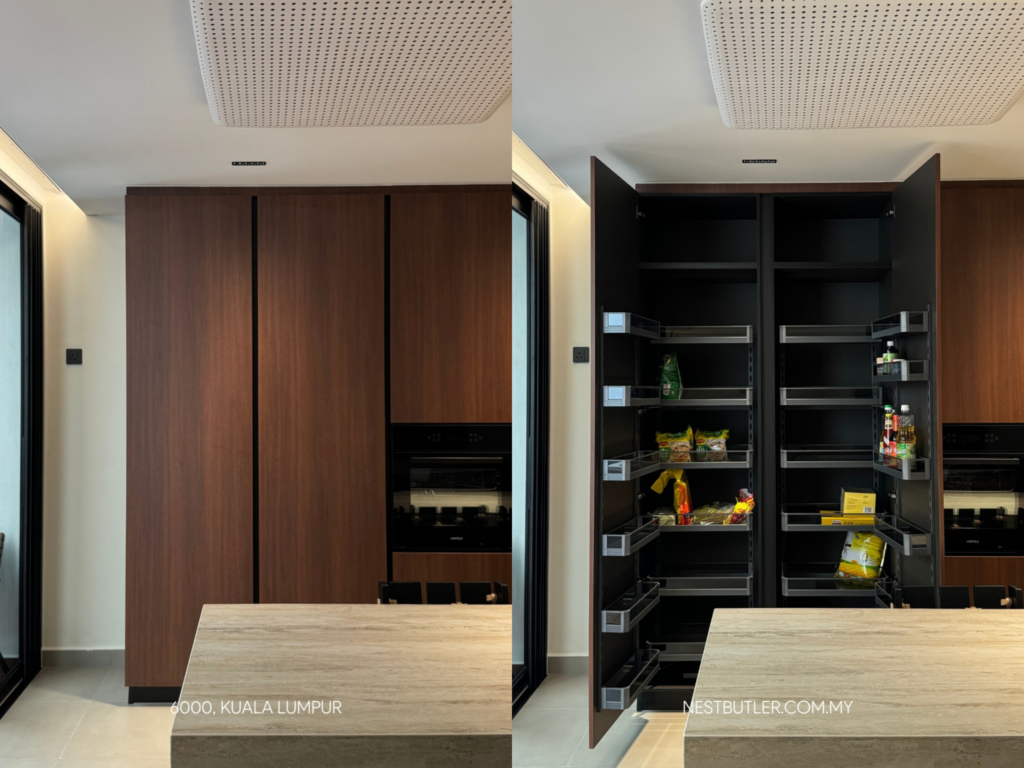
One of the most striking design decisions in this kitchen is what you don’t immediately see, the refrigerator. Integrated behind floor-to-ceiling cabinet panels that match the surrounding cabinetry, the refrigeration compartment disappears into the overall design.
This approach solves one of the persistent visual challenges in modern kitchens: how to maintain clean, uninterrupted lines when large appliances demand significant space. Traditional freestanding refrigerators, regardless of finish quality, create visual breaks in cabinetry runs. They become focal points by default, not by design.
The concealed integration does more than preserve aesthetics. It addresses a practical concern familiar to anyone who’s ever hosted guests or simply wanted their kitchen to look presentable without a pre-visit cleanup scramble. Refrigerator surfaces especially in Malaysian households where they often serve as informal notice boards, display spaces for children’s artwork, and convenient spots to stick shopping lists accumulate visual clutter.
Behind matching cabinet panels, all of that disappears. The refrigerator remains fully functional and accessible, but when closed, the kitchen presents a unified facade. No magnetic clutter, no fingerprint-prone stainless steel catching light inconsistently, no appliance bulk breaking the sight line.
The implementation also speaks to the precision of the cabinetry work. Integrating refrigeration behind custom panels requires exact measurements, proper ventilation considerations, and hardware that can support the weight and repeated opening cycles. The plywood construction’s strength becomes particularly relevant here by supporting not just shelf loads but the mechanical demands of integrated appliances.
The Island: Functionality Reimagined
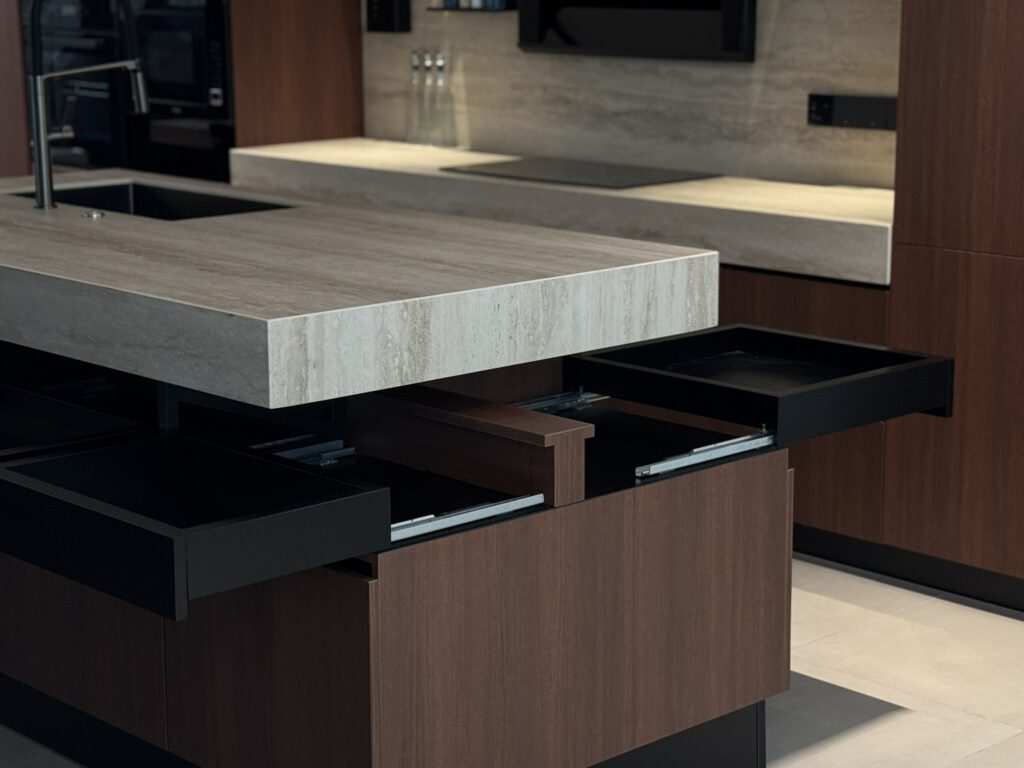
The kitchen island anchors the space both visually and functionally, but its real story is told when you open the drawers and cabinets.
Deep drawers with smooth-action mechanisms handle everything from stock pots to baking trays without the awkward stacking and shuffling common in standard-depth storage. The black-interior drawers aren’t just a dramatic design choice, they create clear visual definition that makes finding items intuitive, especially when drawers are full.
Open shelving sections integrated into the island base provide accessible storage for frequently used pots and pans. This isn’t decorative open storage meant for artfully arranged items; it’s working storage positioned at the exact height that makes grabbing a pan or returning a pot feel natural. Every vertical inch of the island translates to usable space, a crucial consideration in Malaysian homes where kitchen footprints often need to work harder than their square meterage might suggest.
The Countertop Decision: Sintered Stone’s Quiet Revolution
Top the island and perimeter counters with sintered stone, a thick layer that’s become increasingly popular among Malaysian homeowners, as the surface answers multiple concerns simultaneously.
Sintered stone’s heat resistance means hot pots can move from stove to counter without trivets or second thoughts. Its non-porous surface doesn’t harbour bacteria or absorb stains, critical for the curries, sambal, and turmeric-heavy cooking that defines Malaysian cuisine. Scratch resistance holds up to the daily reality of knives, cutting boards sliding across surfaces, and the general wear of active cooking.
But perhaps most importantly for Malaysian kitchens, the material’s density means it doesn’t react to humidity fluctuations. While marble etches with acidic spills and some engineered stones can show watermarks, sintered stone maintains its appearance regardless of Malaysia’s weather patterns.
The substantial thickness creates visual presence while also contributing to durability. It’s a material choice that looks uncommon because quality at this level still is uncommon, despite becoming more accessible.
The neutral, subtly veined pattern coordinates with both the warm wood cabinetry and the sleek black appliances and fixtures, creating coherence without demanding attention. It’s a countertop that lets the food, the gathering, and the actual use of the kitchen take centre stage.
The Details That Define Daily Use
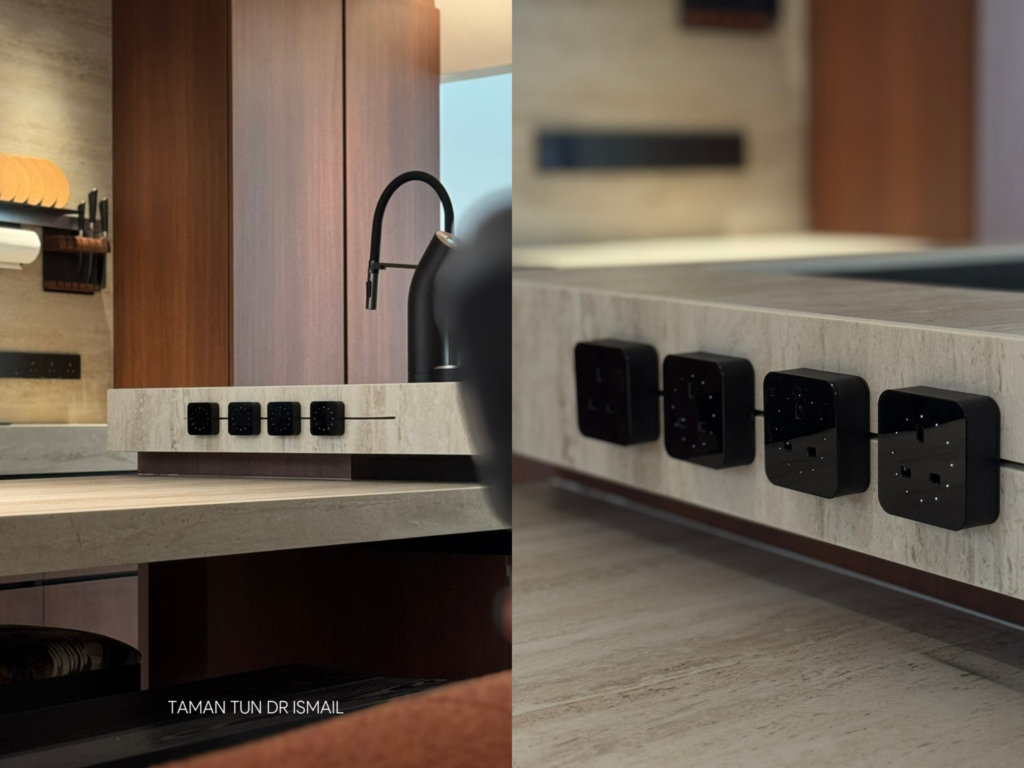
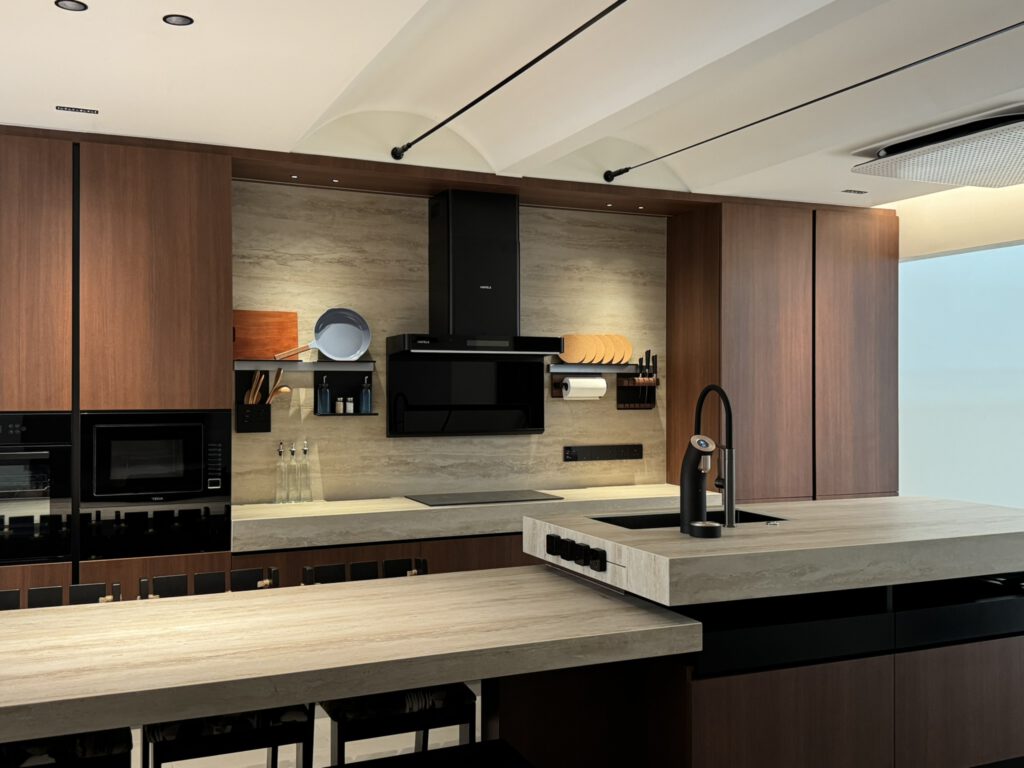
Look closely at the island countertop and you’ll notice something uncommon: integrated power outlets that appear to emerge directly from the stone surface. There’s no visible track, no metal strip interrupting the clean lines, just flush-mounted outlets that provide power exactly where you need it.
This is the kind of detail that separates thoughtful design from standard execution. Malaysian cooking often involves multiple small appliances like rice cookers, blenders, hot water dispensers, requiring power. Traditional solutions involve visible power strips or outlets that interrupt sight lines. This installation hides the infrastructure while maintaining full functionality, delivering the seamless aesthetic that defines contemporary design without sacrificing practical needs.
The wall-mounted organizational system near the food preparation area exemplifies the same philosophy. A rail system holds paper towels and cooking utensils within arm’s reach, using vertical wall space that typically goes unused. It’s accessible storage that doesn’t consume precious counter area, crucial in a kitchen where work surfaces need to remain clear for actual work.
Appliance Integration and Spatial Flow
The tall cabinet section housing the built-in oven and microwave demonstrates how modern Malaysian kitchens are rethinking appliance placement. Rather than positioning ovens at knee level where they’re awkward to access, or microwaves where they consume valuable counter space, integrated installation at comfortable heights makes both appliances more usable.
The handleless cabinet doors maintain the clean facade while push-to-open mechanisms ensure access remains effortless. Black appliance finishes coordinate with the overall colour palette with warm woods, neutral stone, black accents, creating visual cohesion without resorting to matchy-matchy uniformity.
Frequently Asked Questions About Kitchen Renovations in Kuala Lumpur
1. Why is plywood better than particleboard for Malaysian kitchen cabinets?
Plywood resists Malaysia’s 80%+ humidity without warping, unlike particleboard which absorbs moisture and swells. Its cross-laminated structure supports 70kg+ per cabinet and lasts 15-20+ years in tropical conditions versus 2-3 years for standard particleboard.
2. How much does a custom kitchen renovation cost in Kuala Lumpur?
Custom kitchen costs in Kuala Lumpur vary by size and materials. Plywood construction with E0-rated materials, sintered stone countertops, and integrated appliances represents mid-to-premium investment with long-term value through durability and reduced replacement needs.
3. What is sintered stone and why is it good for Malaysian cooking?
Sintered stone is heat-resistant and non-porous, perfect for hot pots, tough stains and spills. Unlike marble or engineered stone, it doesn’t etch, stain, or react to Malaysia’s humidity, requiring minimal maintenance.
4. Can I integrate my refrigerator into custom cabinetry?
Yes, with proper ventilation and precise measurements. Integrated refrigerators create seamless lines, eliminate fingerprint surfaces and magnetic clutter, while plywood construction supports the weight and daily use.
5. What is E0 emission standard and why does it matter?
E0 is the highest formaldehyde emission standard for engineered wood, indicating minimal VOCs. Critical for Malaysian homes where kitchens connect to living areas, E0-rated materials improve indoor air quality and protect family health.
Living With It: The Daily Reality Living in Kuala Lumpur
The true test of any kitchen isn’t how it photographs but how it functions when weekend meal prep sprawls across every surface, when family gathers for extended cooking sessions preparing for celebrations.
This kitchen passes that test through careful attention to how storage positions relate to workflow, how materials perform under actual use, and how the design accommodates both the active cooking Malaysian families do and the social gathering that happens simultaneously.
The combination of deep drawers, open shelving, concealed appliances, and thoughtfully positioned closed storage means there’s a logical place for everything, and more importantly, that “everything” actually fits. The plywood construction holds up to fully-loaded cabinets without the door alignment issues that plague lesser materials. The sintered stone develops no patina of stains despite regular use. The laminate cabinetry cleans quickly and looks fresh.
It’s the quiet competence of a well-built kitchen: nothing demanding constant attention, nothing requiring special handling, everything working as it should while looking how you want it to.
The Takeaway for Malaysian Homeowners
For those considering kitchen renovations, this project illustrates what’s possible when material specifications prioritize long-term performance and health alongside aesthetics.
The plywood construction’s resistance to humidity damage, the E0 emissions standard reducing indoor air pollutants, the sintered stone’s durability against Malaysian cooking demands, the concealed appliance integration maintaining clean sight lines. These choices create value that compounds over years of daily use.
It’s a kitchen built for how Malaysian families actually live: cooking frequently and with intensity, needing storage that accommodates everything from rice cookers to specialized ingredients, wanting spaces that feel good to spend time in without requiring obsessive maintenance, and appreciating design that remains composed even when life gets messy.
The Taman Tun Dr Ismail, Kuala Lumpur kitchen represents Nest Butler’s approach to custom cabinetry: thoughtful material selection, attention to Malaysian living conditions, and commitment to health standards as baseline rather than upgrade. Every project begins with understanding how the space will be used and what challenges it needs to overcome, then building accordingly.
Like what you see in this design and want to learn more about the materials behind it? Book an appointment with our project specialist for a personalized consultation.